
All rural home or cottage sales generally require a bacterial water sample as part of the financing requirement of the transaction. This has become a topic of controversy, as purchasers have experienced difficulties after the sale with bacteria and adverse water quality. In the province of Ontario, there is currently no requirement for who takes the water sample for the real estate transaction, only that it must be tested by an accredited laboratory.
The sampling is commonly conducted by the selling realtor or by the property owner at no charge with the local Health Unit. The vast majority of samples taken are done so in an ethical and responsible manner. When adverse samples occur, action is taken to correct the situation and treat the water followed by a resampling to verify bacterial absence in the water.

However, there are an unknown number of samples that are taken from different locations, from bottled water or a municipal water source and used to represent a sample from the property for sale. These unethical sampling processes go undetected and without scrutiny or persecution, as there are no legislation or procedures for sampling that are required by the province or legal system. The motivation for this dishonest practice is driven by the monetary gain at the closing of the deal.
For example, the money earned on a $499,000 dollar transaction is $24,950 dollars with a 5% commission being paid to the realtor.
New owners of property are still very much in the bliss stage of ownership and rarely conduct a second water sample to verify bacterial safety after the purchase. It is not until someone becomes ill or adverse water quality is noticed before most owners resample the water or contact a water treatment company.
Illustrative Case: Manitoulin Island
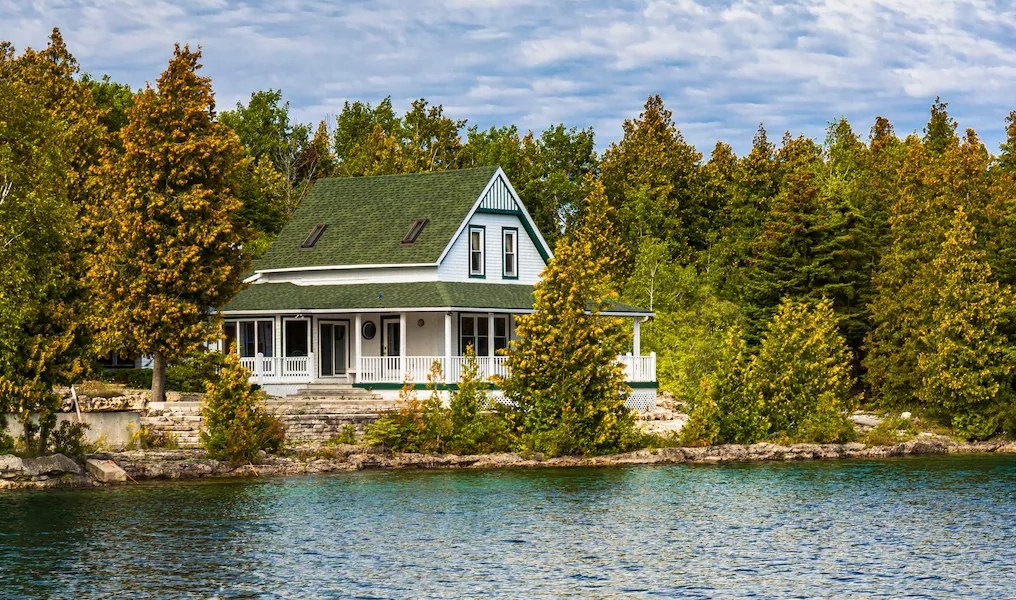
A recent example clearly illustrates this point. A realtor, who shall remain unnamed, sampled water at a cottage property for sale on Manitoulin Island. The initial sample results came back marked “unable to test” because the water was deemed unsuitable for drinking water testing. A second sample taken by the same realtor the following week also resulted in an inability to test, this time due to background interference.
At this point, the potential purchaser contacted me to assess the situation; however, I was unable to gain access to the property because the seller refused to allow anyone inside the residence. Sometime after I was contacted, but prior to the closing date, a third sample was taken by a different realtor from the same firm. Those results showed 0 coliform and E. coli, indicating no bacterial contamination in the water.
When purchasing a rural property, it is a good recommendation to have a certified water treatment individual assess the water quality as part of the potential purchase.
With this being the case, the sale proceeded and the new owners took possession. Very concerned about the quality of the water, they arranged for me to be onsite the day they received the keys and ownership. I arrived prepared to sample properly for bacteria and additionally for water hardness, iron, pH, total dissolved solids as well as sulphur as these contaminants are frequently found in area surrounding the property.
When the tap was turned on, the water flowing into the sampling container was dark orange and had a distinct odour. Both of these characteristics are common and distinct indicators of excessive amounts of iron being present. However, as the property had not been used for some time, I decided to flush the pipes and let the tap run for a half hour to allow for accurate sampling. There was no change in the colour or smell.
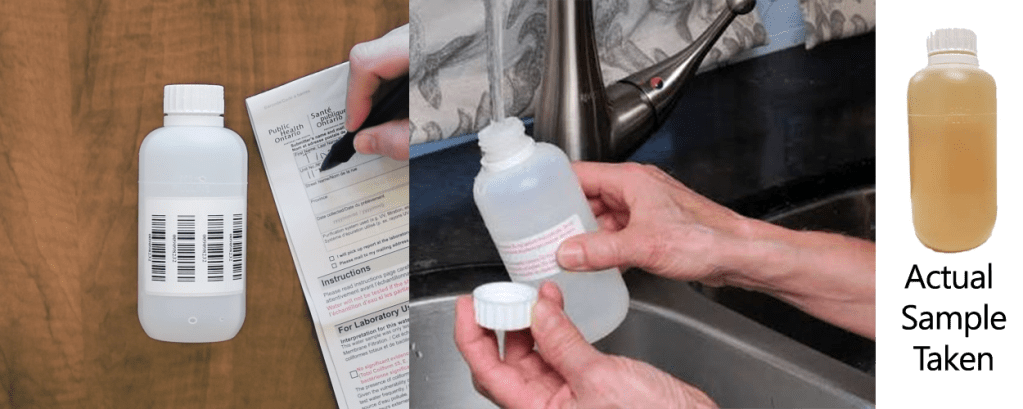
Iron commonly begins to stain and cause problems at levels of 0.5 to 0.75 ppm. The test results at this cottage were 9 ppm, and repetitive testing for an additional 15 minutes yielded no change. As the colour remained very dark, I instructed the homeowner to flush out the well and run the water over the weekend as much as possible.
Leaving three sample bottles, I instructed them to take samples on consecutive two day intervals. Once completed, they were brought to our office the following week for testing. All three sample bottles had iron levels of 10+ ppm and a colouring of a dark orange. One of the samples taken was submitted to the local public health unit for bacterial analysis and resulting in an inability to be sampled due to unsuitable for drinking water reasons.
How could the second realtor submit a viable water sample from this property when three other attempts failed over three weeks?
This is just one of a multitude of real estate water examples that I have personally been involved in, although countless others have no doubt occurred. Third party, certified water testing should be a requirement in real estate transactions conducted by an accredited individual who is not associated with the buyer, seller or real estate agent. This would eliminate the loophole that exists within the system as well as provide clarity for all parties involved, eliminating the potential for unethical sampling.
Without certified water testing requirements through government legislation and law, there is no guarantee that water in your real estate transaction is secure and conducted in an ethical manner. Eliminating the potential for misconduct in real estate water transactions allows for a reliable purchase for the end consumer and ensures water safety at their new property.
Volume 3 Issue 5 Wahl H2O – Water Awareness
Copyright 2019 Jeff Wahl | Wahl Water | All Rights Reserved
Contact Jeff via email jeff@wahlwater.com
H2O Insights – The WahlH2O Blog with Jeff Wahl

Well Water: A Home Buyer’s Ordeal
Buyers will often trust the seller or Realtor when a water sample…
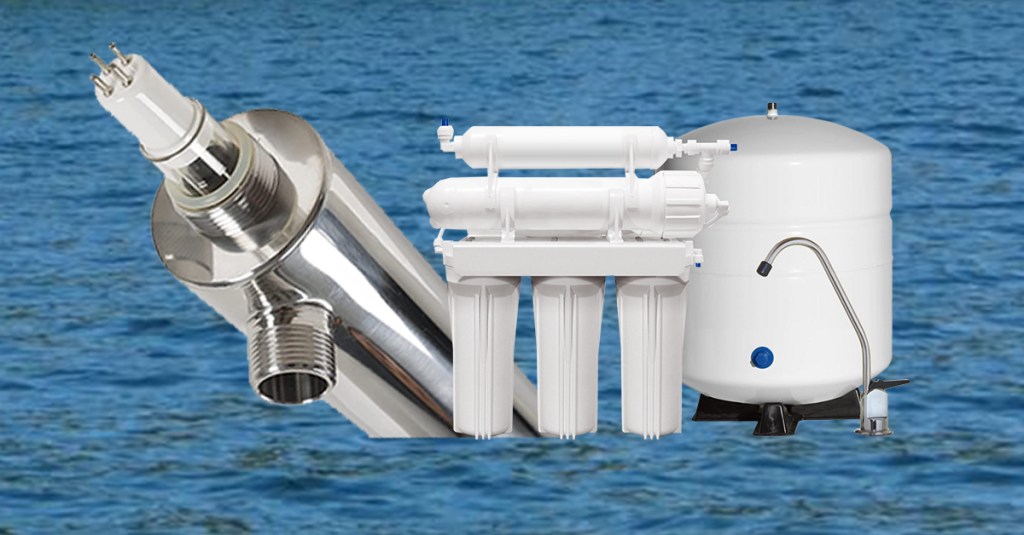
Ultraviolet Disinfection (UV) vs Reverse Osmosis (RO)
There are many common misconceptions about which water treatment equipment …

Drinking vs Working Water
Not all water used in a household needs to meet the same quality and safety standards…


Leave a comment