
The average Canadian citizen is not aware of the potential risks to water quality outside of city limits where little regulation and testing are conducted. In rural areas people trust the public health unit with water sampling for verification of safety, in real estate transactions and as personal drinking water sources among others. The Canadian Drinking Water Quality Guidelines (CDWQG) contain 97 parameters with minimum safety levels, of which e.Coli and Total Coliform account for only two parameters in a public health unit test. The remaining 95 parameters are not part of this test.
Municipal water suppliers generally conform to the CDWQG and are required to obtain a Certificate of Approval for their treatment plant and distribution systems, which is related to the water source and the market served. This certificate sets out the required testing and maintenance to be performed to ensure continuing compliance. These facilities are required to undergo routine testing, complete maintenance and detailed record keeping. Rural private systems are left to individuals to determine their own water safety with no required monitoring or testing of any kind.
Making the Case
The State of Private Drinking Water Wells in Canada Study has identified that up to 40% of all rural water sources contain bacteria within the country. Most people do not test their water on a regular basis and those that do generally participate no more than 3 times a year. 1
Arsenic, a toxic chemical can be placed in a water sample, taken to a health unit and be completely undetected. The sampling is for bacterial presence only, thus missing this harmful element. The same would be true for lead, pcb’s, herbicides, pesticides, sodium and any other contaminants.
Total Dissolved Solids (TDS) are completely dissolved in a water supply and generally invisible to the human eye. They are present in water sources typically associated with limestone rock and not recommended to drink at high levels. They are virtually unheard of to most people and are not found in public testing despite their destructive nature.
The Human Influences
A study conducted by Orb Media in conjunction with the CBC identified microplastics (extremely small pieces of plastic resulting from breakdown of consumer products) in 93% of all bottled water sold on the global market. 2 Consider the volume of plastic in our landfills and waterways. There is a tangible possibility that microplastics could exist in virtually every water source, just undetected.
A study by the CBC states that 371 lakes in eastern North America have shown sodium level increases due to runoff from salt used to melt the snow and ice.3 What can be said for all of the other lakes, rivers and water sources not included in the study or impacts on groundwater sources?
Two years after a fire destroyed a flea market near Smiths Falls, Ontario., toxic chemicals (PFAS) from firefighter’s foam used to douse the flames were found to have contaminated well water of homes, some up to half a kilometer away.4 Why did it take two years to be discovered and what risk faces every other rural or populated area where fire strikes?
Septic systems are one of the leading contributors to water pollution in rural areas. They are especially problematic when located in close proximity to each other in towns with no water or sewer services. A recent study in the United States has definitively linked contaminants from septic systems to groundwater leaching with proven documentation. 5
Sodium Hypochlorite – The Chlorine, Javex & Bleach Trio
Chlorine has the potential to create the carcinogenic byproduct Trihalomethane when it comes in contact with organic materials. At the direction of public health units, bleach is recommended to disinfect well water in rural areas when bacteria is detected. Ontario Regulation 319/08 requires small drinking water systems that serve water to the public to use chlorine as part of treating water fed directly from lakes. Trihalomethanes are monitored in public water systems; however not at all in the country. They are hardly even discussed in most cases.
Linking the Pieces Together
Water is a universal solvent meaning it picks up just about anything it comes into contact with. Add to this the movement of water over vast areas and it is virtually impossible to know every particle contained within a water source. Most contaminants are completely invisible and dissolved in the water possessing no significant odour or taste. The other variable lies in two contaminants coming into contact with each other. The mixing can create byproducts, which are too numerous or possible to identify.
The fact that pollution of water sources is undeniable
The idea that water is clean, safe and free from all contaminants in this country is no longer a realistic reality. Why has there been no attempt to have a collective push in rural areas for better testing and monitoring? The scope of potential contaminants and the cost associated with monitoring is prohibitive given the vast rural acreage in this country. Why is there not better education about the potential for contaminants in water? By the time most contaminants are detected, significant time has passed and no option to test through the current public health unit is made available.
Water Treatment Solutions
Treating rural water for over twenty years and being a certified water professional, my experience has shown that education is left up to private individuals, determining their own water safety based on their individual knowledge and desire to have safe water. This is where the role of proper water treatment equipment is crucial. Water treatment systems have the capacity to provide safe water and eliminate the risk of contamination through proper design, installation, maintenance and ongoing testing.
Citations & Footnotes
1 GW Solutions Incorporated. State of Private Drinking Water Wells in Canada: A Human Health Risk Perspective. Council of the Federation Secretariat, 2013.
2 Mason, Sherri A., Victoria G. Welch, and Joseph Neratko. “Synthetic Polymer Contamination in Bottled Water.” Frontiers in Chemistry, vol. 6, 2018, p. 407.
3 News Source: CBC News, “Road Salt Threatening Health of Freshwater Lakes, Study Finds,” April 10, 2017, https://www.cbc.ca/news/science/lakes-road-salt-chloride-study-1.4064476.
4 https://www.cbc.ca/news/canada/ottawa/smiths-falls-fire-contamination-wells-1.4934750
5 Murphy, H. M., McGinnis, S., Blunt, R., Stokdyk, J., Wu, J., Cagle, A., Denno, D. M., Spencer, S., Firnstahl, A., & Borchardt, M. A. (2020). Septic systems and rainfall influence human fecal marker and indicator organism occurrence in private wells in Southeastern Pennsylvania. Environmental Science & Technology, 54(6), 3159–3168. https://doi.org/10.1021/acs.est.9b05405
H2O Insights – The WahlH2O Blog with Jeff Wahl

Well Water: A Home Buyer’s Ordeal
Buyers will often trust the seller or Realtor when a water sample…
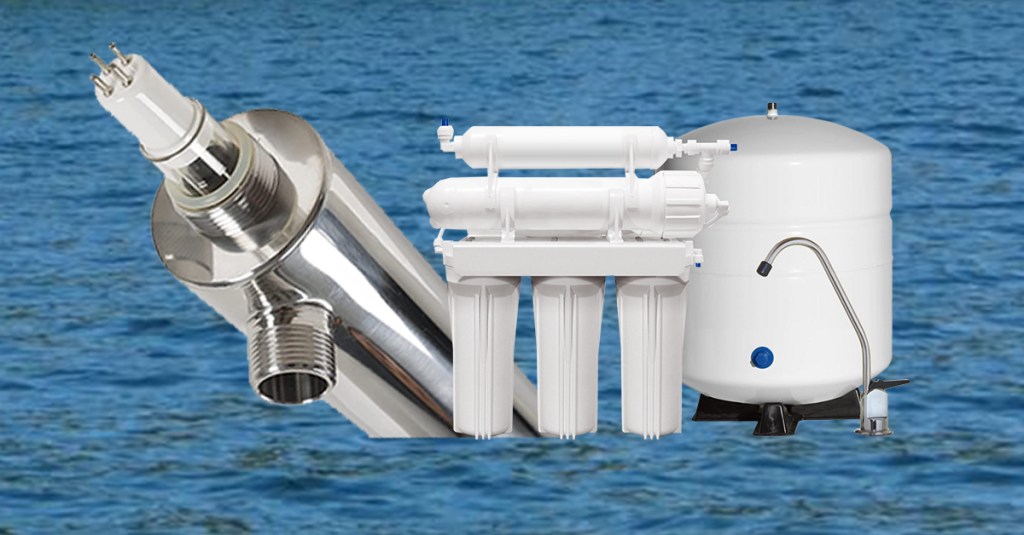
Ultraviolet Disinfection (UV) vs Reverse Osmosis (RO)
There are many common misconceptions about which water treatment equipment …
Drinking vs Working Water
Not all water used in a household needs to meet the same quality and safety standards…
Volume 3 Issue 3 Wahl H2O – Water Awareness
Copyright 2019 Jeff Wahl | Wahl Water | All Rights Reserved
Contact Jeff via email jeff@wahlwater.com



Leave a comment