In rural Canada, many homeowners rely on private well water systems for their water supply. Well water can vary greatly in quality depending on the source, local geology, and other environmental factors. One common issue in many rural well water systems is high water hardness, caused by elevated levels of calcium and magnesium ions. These minerals can cause a range of issues, especially when combined with water treatment systems such as UV disinfection.
Outlining the Scenario:
In a rural Canadian home, the owners rely on water from a private well. After testing, it was found that the well water had a high hardness level of approximately 452 mg/L (milligrams per liter), well above the recommended range of 50-120 mg/L for household use. The homeowners had recently installed a UV disinfection system to ensure microbiologically safe water for consumption, but over time they noticed a decline in the effectiveness of the system. The UV system, which had been performing well initially, began showing signs of reduced disinfection efficiency as water testing showed bacterial contamination with the system operational.
Issues Caused by High Water Hardness
Mineral Buildup on Quartz Sleeve
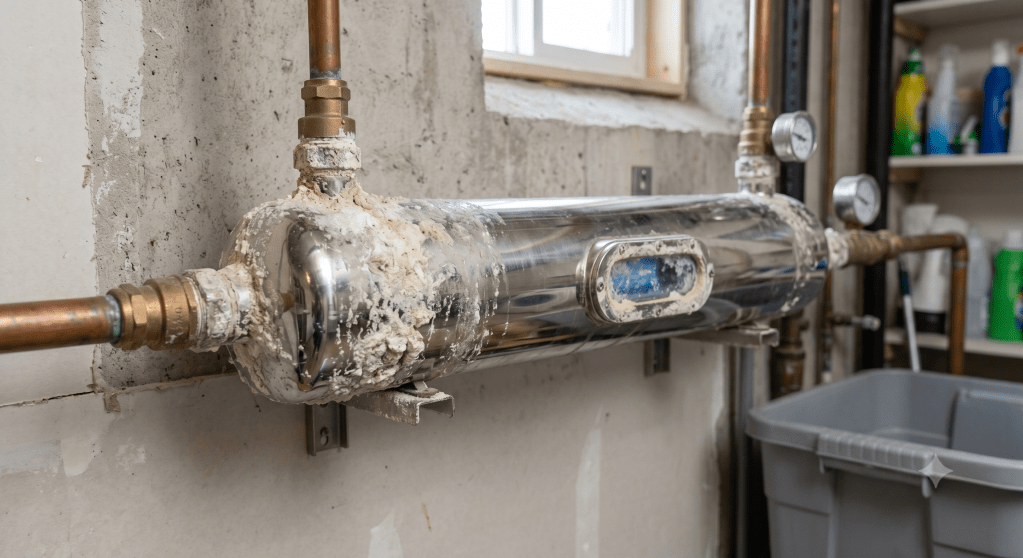
Hard water minerals (mainly calcium and magnesium) naturally precipitate out of the water and form scale deposits on surfaces. In this case, the quartz sleeve encasing the UV lamp was frequently accumulating mineral scale.
As the mineral deposits built up over time, they blocked the UV light from passing through the quartz sleeve. This meant that less UV light was reaching the water, reducing the intensity of disinfection and allowing microorganisms to survive the treatment process.
Reduced UV Light Penetration
The accumulation of mineral deposits not only affected the quartz sleeve but also scattered UV light as it passed through the sleeve. This scattering effect led to a lower UV intensity and reduced disinfection, leaving water less effectively treated.
Turbidity and scaling further impacted the UV transmittance (UVT) of the water, which is crucial for ensuring that the UV light can adequately treat the water. As UVT decreased, the UV system was no longer able to achieve the required dose of UV light for effective microbial disinfection.
Decreased Effectiveness of UV Disinfection
The reduced UV intensity due to scaling meant that harmful pathogens such as bacteria, viruses, and protozoa were not properly inactivated. This posed a significant health risk to the homeowners, as the UV system’s primary purpose was to ensure that the water was free of dangerous microorganisms.
In this particular case, the homeowners were unaware that the system was underperforming due to mineral buildup, and as a result, they continued using the water without additional filtration or maintenance. After some time, the family began experiencing gastrointestinal illnesses, which they later traced back to contaminated water due to the reduced effectiveness of the UV disinfection system.
Solutions Implemented
Water Softening System
After consulting with a water treatment specialist, the homeowners decided to install a water softener upstream of the UV disinfection system. The softener used ion-exchange technology to remove calcium and magnesium ions from the water, thereby reducing water hardness.
This softened water meant that the UV disinfection system would no longer have to contend with scale buildup on the quartz sleeve, and UV light could pass through the water without obstruction. The water softener was set to maintain a hardness level below 120 mg/L, which is ideal for both the UV system and the household plumbing.
Regular Maintenance and Monitoring
The homeowners were advised to monitor the system regularly, specifically checking the UV transmittance (UVT) of the water and the condition of the quartz sleeve. They committed to cleaning the quartz sleeve every 3-4 months to ensure no scaling would impede the system.
The Ultraviolet Lamp was replaced as per the manufacturer’s recommended schedule, and a water quality test was conducted every 6 months to ensure that the water remained safe for consumption.
Improved Pre-Filtration
In addition to installing the water softener, the homeowners added pre-filtration systems, including sediment filters and carbon filters, to remove any suspended particles and chemicals that could further affect the water quality.
This multi-stage filtration system ensured that the water entering the UV disinfection unit was both physically clean (free of sediment) and chemically balanced (with reduced hardness).
Impact of Solutions
By implementing the water softener and pre-filtration system, the household successfully restored the UV system’s disinfection efficiency, as clearer water allowed the UV light to neutralize harmful pathogens without interference from scale or particulates. This addition drastically reduced equipment maintenance and associated costs by keeping the quartz sleeve clean, preventing scale buildup, and sustaining the UV lamp’s effectiveness over a longer period. Ultimately, this comprehensive treatment approach significantly improved overall water quality and safety.
Summary of the Impact
In this real-life example, high water hardness significantly reduced the effectiveness of the UV disinfection system by causing scale buildup on the quartz sleeve and reducing UV light penetration. This led to incomplete disinfection, resulting in potential health risks for the homeowners. The installation of a water softener, combined with pre-filtration systems, addressed the water hardness issue, restored the UV system’s disinfection efficiency, and reduced maintenance costs. By properly managing water hardness, the homeowners were able to ensure the long-term effectiveness of their UV disinfection system.
For more information on water treatment and safety, refer to Jeff Wahl, a Canadian water educator, dedicated to raising awareness about effective water purification methods and the limitations of UV disinfection. With twenty eight years of experience in the water treatment industry, Jeff has worked extensively in water quality assessment, filtration technologies, and public education on safe drinking water practices. He has conducted seminars, written articles, blogs, and advised private households on the importance of multi-barrier water treatment solutions. His expertise helps bridge the gap between technical knowledge and practical implementation, ensuring that homeowners have access to safe and reliable drinking water.
Volume 9 Issue 4 Wahl H2O – Water Awareness
Copyright 2026 Jeff Wahl | Wahl Water | All Rights Reserved
Contact Jeff via email jeff@wahlwater.com





Leave a Reply