
Many rural water users have an inherent belief that water from Georgian Bay is safe to drink, whether it has been treated or not. This common misunderstanding is often based on the idea that the water was safe for previous generations, or that a current treatment with proper operation provides safe water.
Additionally, some people assume the water is safe if it looks clean and is odourless. However, there’s more to water quality than what meets the eye. Contaminants, such as microbiological agents, chemicals, and runoff from septic or industrial sources, can have a negative effect on the water’s safety and often remain undetected without proper water testing procedures.
It’s easy to get confused about which water treatment system is best for your needs, as there are many common misconceptions about what each type of equipment accomplishes. The most widespread options are ultraviolet (UV) disinfection, cartridge filtration, and reverse osmosis systems. It’s important to remember that each of these systems work differently and has unique requirements for maintenance and proper operating procedures to treat your water effectively.
Ultraviolet Disinfection | Microbiological Disinfection
UV Systems disinfect water using UV Rays ensuring that there are no bacterial contaminants that could cause illness that are active in the water. UV systems transfer electromagnetic energy from a mercury arc lamp to an organism’s genetic material (DNA and RNA). When UV radiation penetrates the cell wall of an organism, it destroys the cell’s ability to reproduce, rendering it unable to replicate or cause harm.
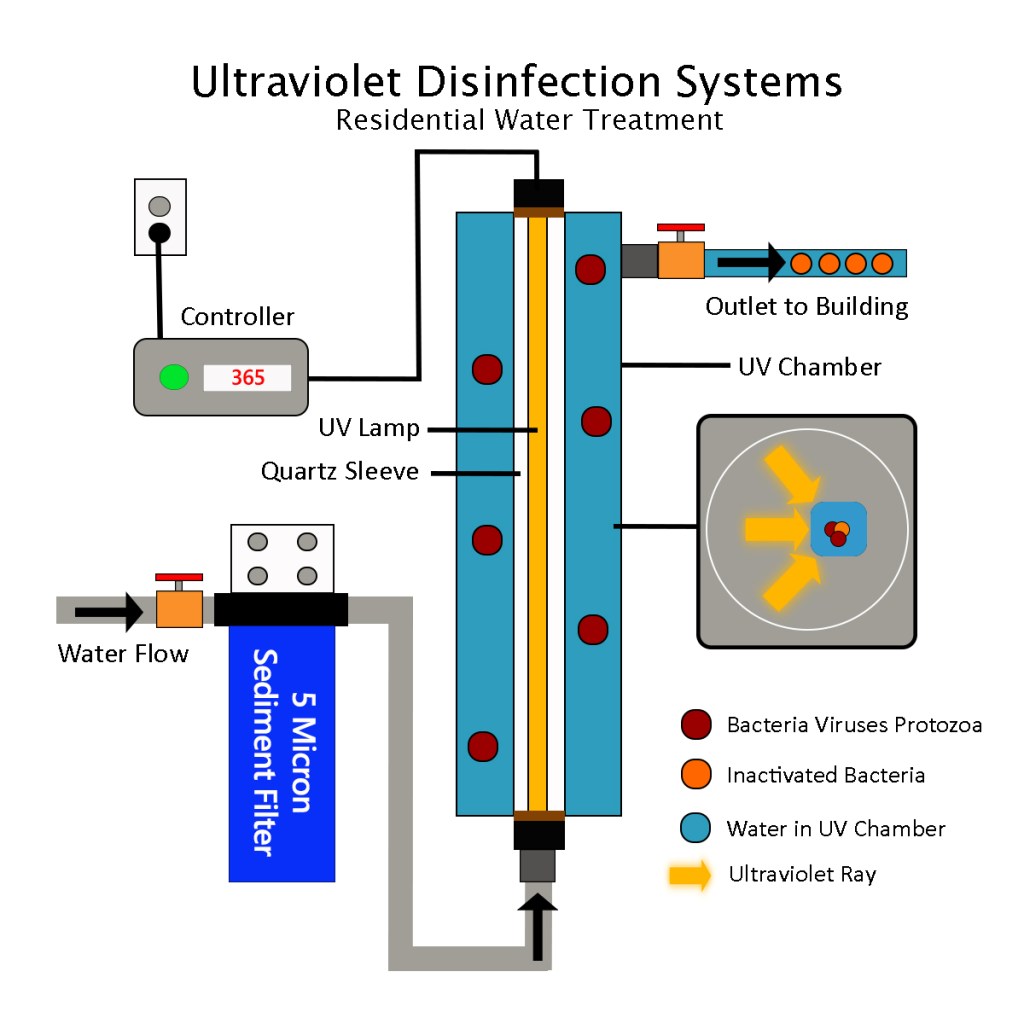
This process physically removes no contaminants from the water and functions through the inactivation of the bacteria. It is suited for treating an entire home or, in some cases, one tap. They are installed where the water source enters a building, typically after a water meter or pressure tank in rural applications. Proper maintenance includes the requirement of annual lamp changes, quartz sleeve cleaning and plumbing disinfections.
Reverse Osmosis (RO) Systems | Contaminant Separation
RO Systems use a series of filters and a membrane to reduce contaminants such as chlorine, sodium, dissolved solids, lead, nitrates, herbicides, pesticides, and various other chemicals. This process takes time to produce the purified water and is typically suited to supply a single drinking water faucet at the kitchen sink or refrigerator.
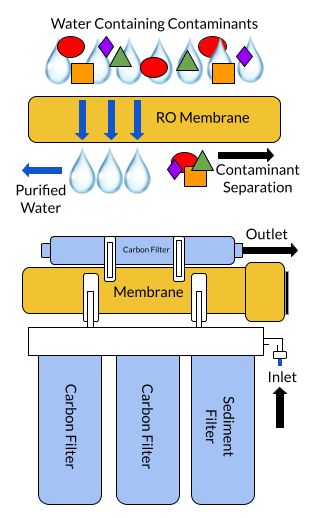
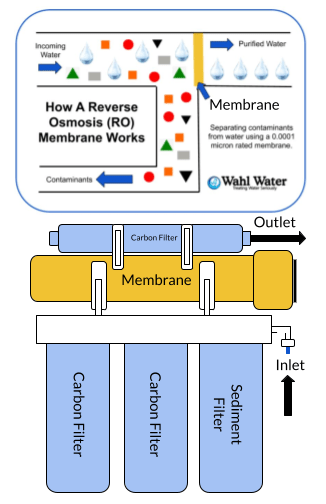
Reverse osmosis systems require minimum operating pressures to work effectively and should not be used on water that is microbiologically unsafe. (contains e-Coli or coliform bacterium)
These systems are typically installed under a kitchen sink or directly below the sink in a basement. Proper maintenance includes the requirement of filter changes every 3, 6, or 12 months, and membrane changes every 2-3 years. Additionally, the system should be properly disinfected with every maintenance interval using a disinfectant suitable for potable water.
Cartridge Filtration | Prevention & Adsorption
A cartridge-based water filter housing operates by channeling water through a replaceable filter element to remove impurities. The housing ensures that all water passes through the filter media before exiting, making it a simple yet highly effective point-of-use (fixture specific) or point-of-entry (whole home) filtration solution.
Sediment Filters: A cartridge-based water filter that works to remove specific impurities.They are designed to remove larger particles like sand, silt, rust, and dirt. They work like a screen, physically blocking these particles from continuing forward with the flow of water entering your home.
Carbon Filters: These are effective at removing chlorine, volatile organic compounds (VOCs), pesticides, and other chemicals that can affect the taste and odor of water. They work through a process called adsorption, where contaminants stick to the surface of the carbon.
Pitcher / Flow Filters: A common and lower cost method of water filtration is a pitcher style container with a reservoir and an internal “flow through” style of filter. A typical pitcher filter contains a carbon based cartridge to remove offensive taste and odour from water. The packaging will clearly indicate that this is to be used on micro-biologically safe (bacteria free) water. The intended use is for chlorinated municipal water and is not recommended for rural untreated water sources.
The comprehensive analysis of water contamination is a complex undertaking, influenced by the unique characteristics of each water source and the diverse origins of potential contaminants. Consequently, the accurate identification and quantification of harmful substances can only be achieved through professional laboratory testing. A correctly applied, installed, and maintained water treatment system, that is designed specifically to address the identified contaminants, is essential for providing treated water that is safe for consumption and daily use.
For more information on water treatment and safety, refer to Jeff Wahl, a Canadian water educator, dedicated to raising awareness about effective water purification methods and the limitations of UV disinfection. With twenty eight years of experience in the water treatment industry, Jeff has worked extensively in water quality assessment, filtration technologies, and public education on safe drinking water practices. He has conducted seminars, written articles, blogs, and advised private households on the importance of multi-barrier water treatment solutions. His expertise helps bridge the gap between technical knowledge and practical implementation, ensuring that homeowners have access to safe and reliable drinking water.
Volume 9 Issue 3 Wahl H2O – Water Awareness
Copyright 2026 Jeff Wahl | Wahl Water | All Rights Reserved
Contact Jeff via email jeff@wahlwater.com





Leave a Reply